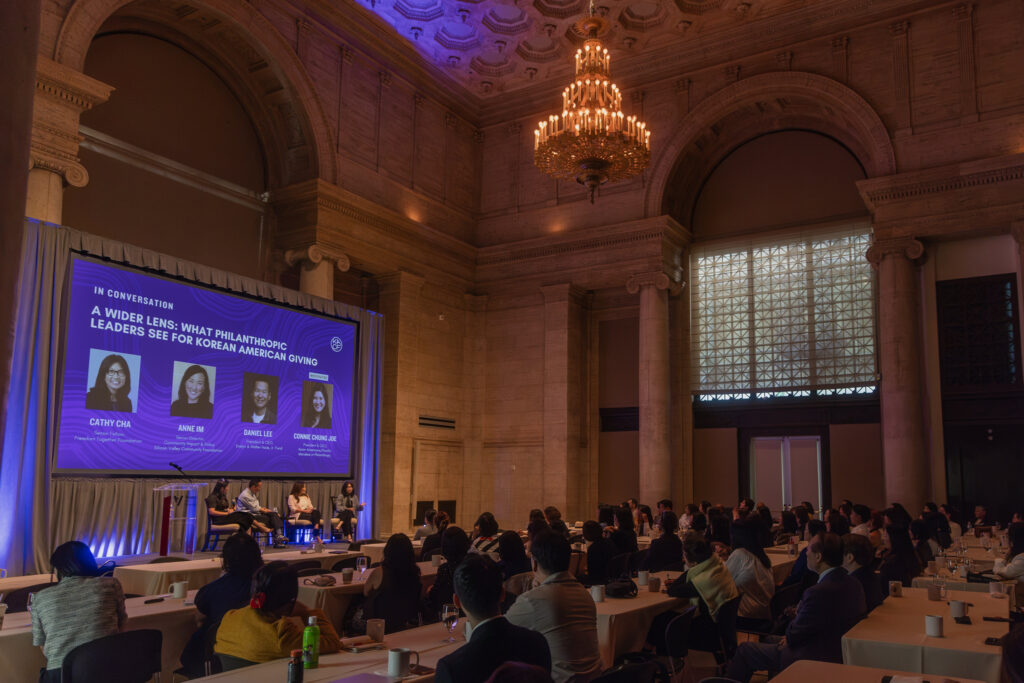
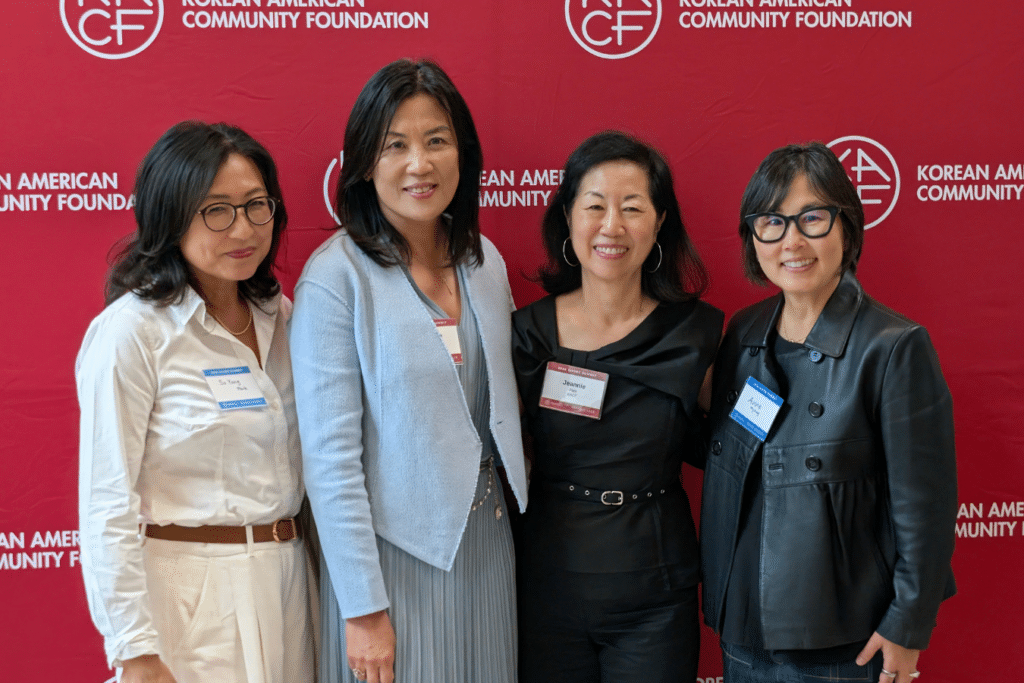
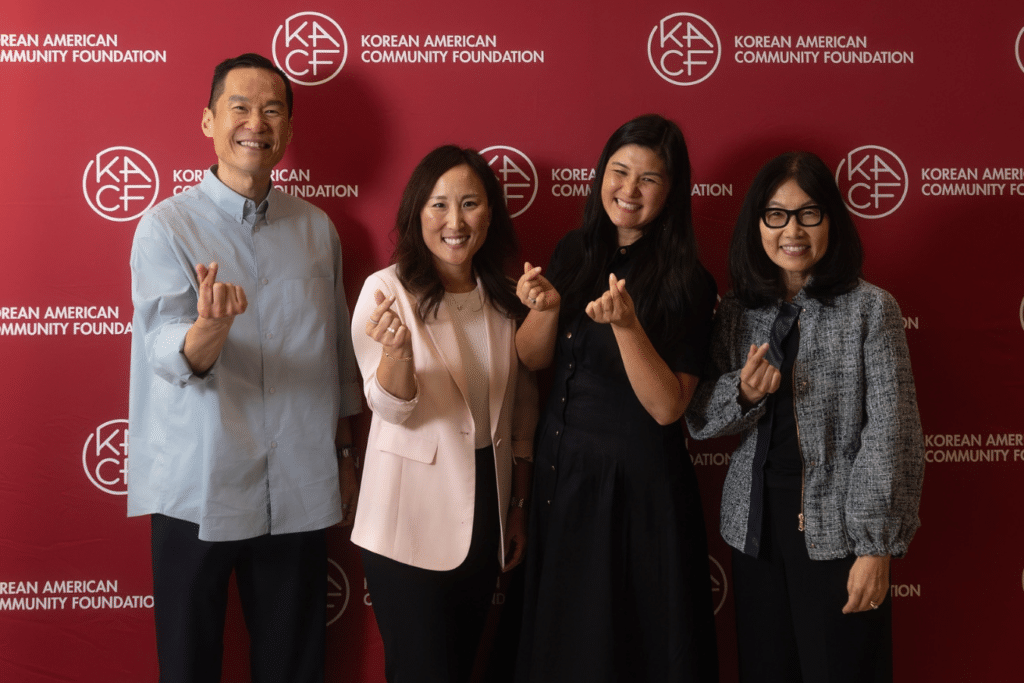
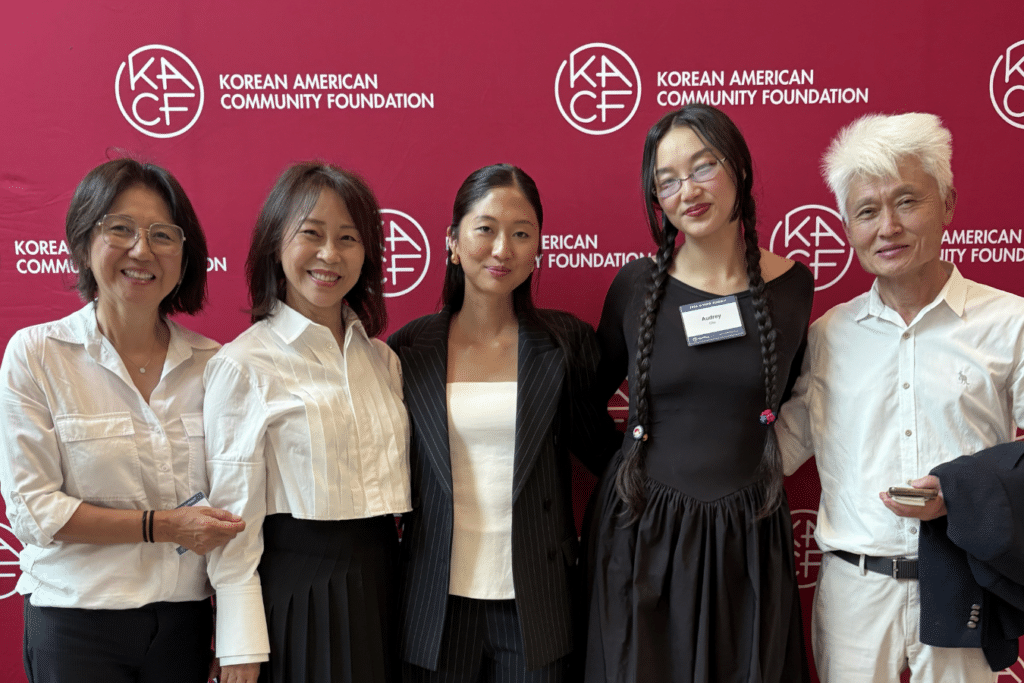
On October 3, nonprofit and foundation leaders, philanthropists, social impact innovators, and community members across generations gathered at the Asian Art Museum of San Francisco for our 2026 Giving Summit.
The Summit has now taken place in three cities, and each gathering has given us a window into the many ways Korean Americans are choosing to invest in our communities.
We are founding and leading nonprofits. Practicing and working in advancing philanthropy. Serving on boards. Starting social impact initiatives. Volunteering our time and bringing our professional expertise, relationships, and resources to the causes that matter to us.
For many of us, and for many of our immigrant parents, these may not have been paths we saw as possibilities. But looking around the room in San Francisco, it was clear just how much that has changed.
We are deeply grateful to our speakers, who were incredibly open and generous with their stories, expertise, and perspectives: Young Seh Bae (Founder & Executive Director, Community Inclusion & Development Alliance), Cathy Cha (Senior Fellow, Freedom Together Foundation), Anne Im (Senior Director – Community Impact & Policy, Silicon Valley Community Foundation), Catherine Jhung (Managing Director, Hercules Capital), Connie Chung Joe (President & CEO, Asian Americans / Pacific Islanders in Philanthropy), Jung Woo Kim (Co-Director, NAKASEC), Daniel Lee (President & CEO, Evelyn & Walter Haas, Jr. Fund), Daniel Lee (COO, Quantify Funds and Quantify Chaos and Co-Founder, Korean Language Center of Sacramento), Jeannie Park (Board Chair, KACF), Paula Park (Founder, Soft Serve), Sandra Schubert (Managing Director, Goldman Sachs), Yeri Shon (Associate Director, MARU Center), and Joy Wheeler (Managing Director, YS Kim Foundation).
Four takeaways from these conversations in San Francisco:
1. When we invest in nonprofits, we are investing in the people, expertise, and leadership our communities need.
We opened the day with “Voices from the Frontlines of Change,” a series of “lightning talks” featuring Korean American nonprofit leaders. They shared deeply personal stories about why they do this work and the lessons they have learned along the way.
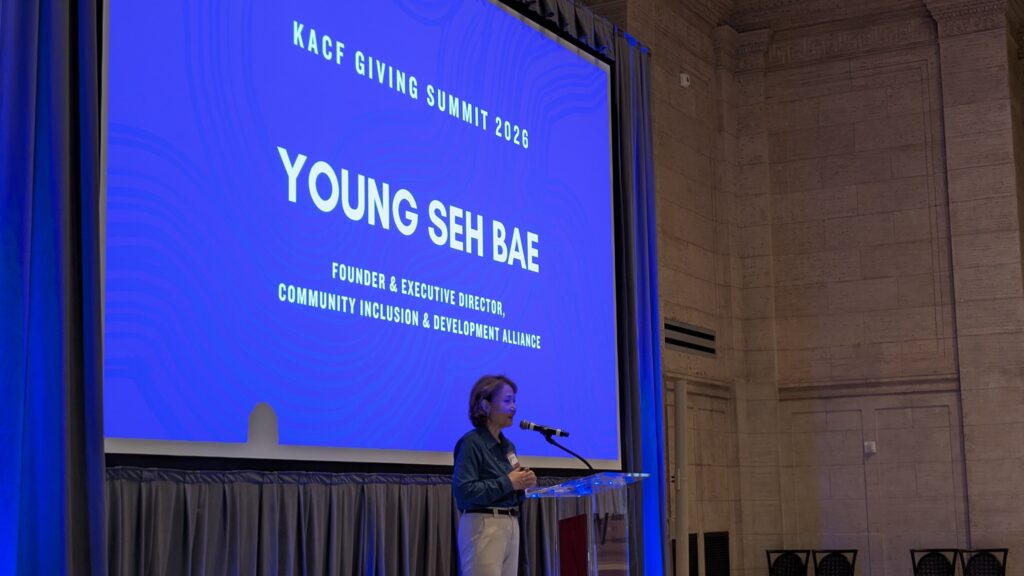
Young Seh Bae, Founder and Executive Director of Community Inclusion and Development Alliance (CIDA), spoke as the mother of an adult son with autism. When she and other parents couldn’t find the support their children needed, they built it themselves. She spoke about the power of “social capital” and, simply, “humans helping humans”: the relationships and the entire community it takes to ensure people like her son, Eugene, are included and able to thrive.
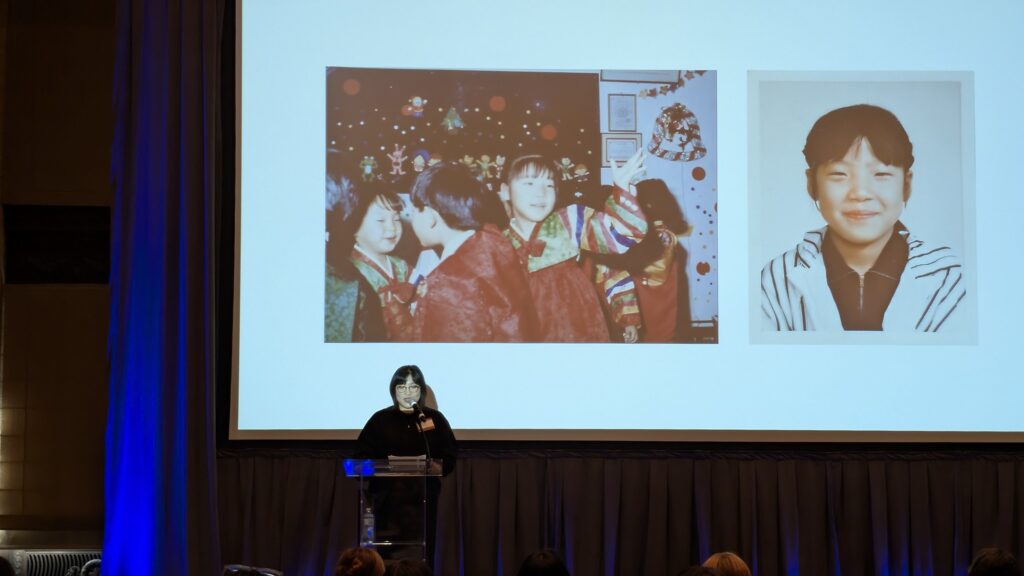
Yeri Shon, Associate Director at MARU Center (formerly the Korean Community Center of the East Bay), shared how she decided not to pursue medical school after finding her calling in nonprofit work, much to the surprise of her immigrant parents. She challenged assumptions about nonprofit professionals and spoke to the expertise, skill, and innovation it requires to help people navigate some of society’s hardest challenges. Her father, who once struggled to understand her decision, came to see this firsthand and now advocates for MARU Center and his community alongside Yeri.
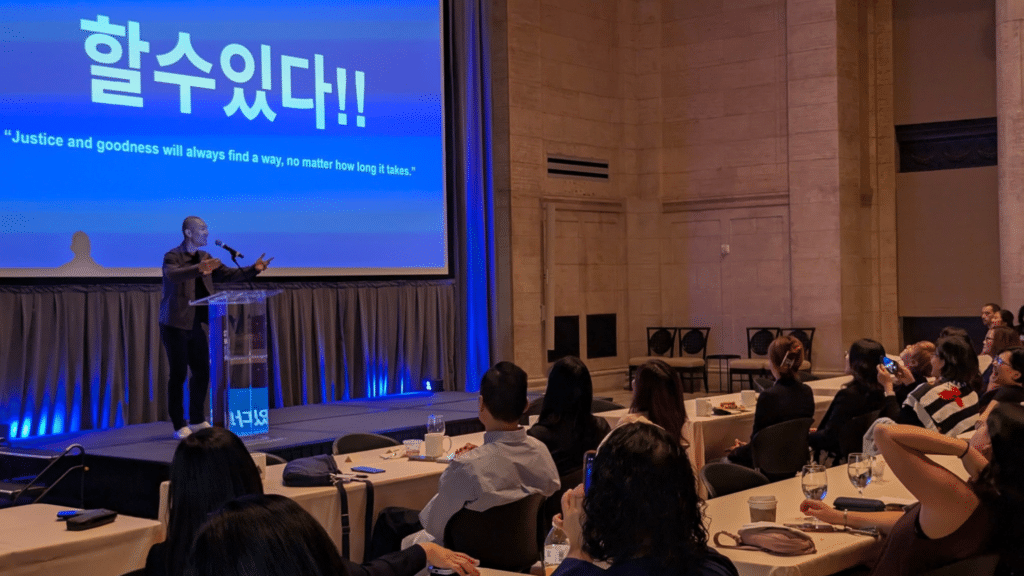
Jung Woo Kim, Co-Director of NAKASEC, described his journey from advocating for his own access to a college education to organizing and leading alongside immigrant communities. His own experience was the starting point, but through his work at NAKASEC, he honed the skills to organize strategically, mobilize people, and turn individual experiences into collective action. His story spoke to the power of sharing our stories, standing alongside others, and finding purpose in something greater than ourselves.
Their stories reminded us that nonprofit work is not a backup plan or a lesser professional path. It is a field that calls for strategy, leadership, creativity, and specialized expertise, often strengthened by the lived experiences that help leaders understand their communities in ways others cannot.
And we need more people choosing this work. The challenges nonprofits take on are complex, and the people working closest to them are often the ones seeing what others miss, asking different questions, and building solutions that make room for more people.
2. If K-culture can inspire the world, why not K-giving?
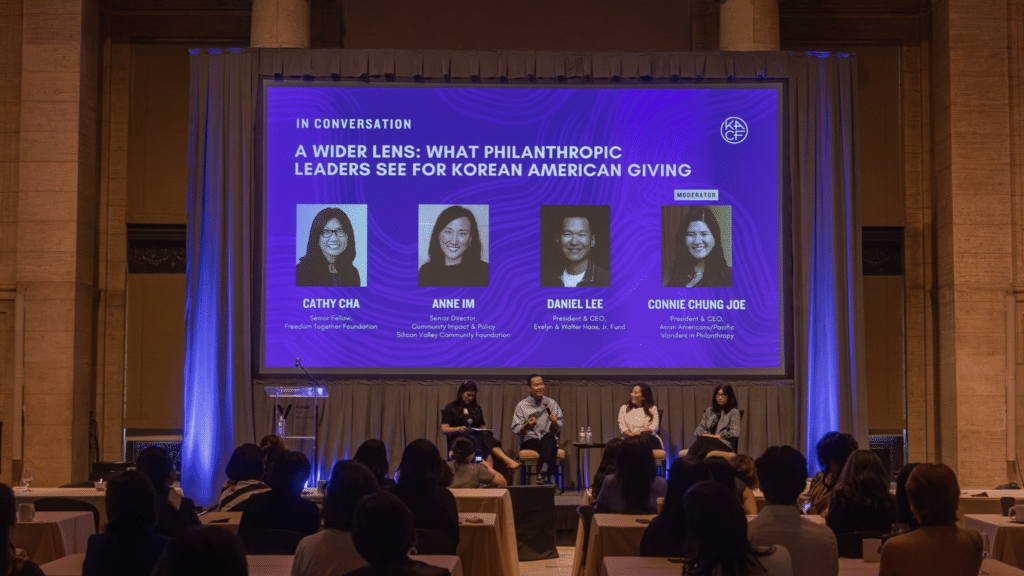
Our culture has unprecedented visibility, and our influence continues to grow across industries and institutions. Today, “K” has become shorthand for excellence and innovation: K-beauty, K-dramas, K-pop, K-food.
A conversation among Korean American leaders in philanthropy Cathy Cha, Anne Im, and Daniel Lee, moderated by Connie Chung Joe, challenged us to consider what this moment asks of us. Drawing on their leadership across major philanthropic institutions, they spoke to how being Korean positions us to take a seat at the table, ask different questions, and help shape institutions and communities in new ways.
Cathy Cha (Senior Fellow, Freedom Together Foundation) offered a glass-half-full view of this moment. “There’s an openness to doing new things, being more creative, and more innovative,” she said. “When there is such dire need and chaos in the world, what we have is an opportunity to rethink how things should go, to break the status quo.”
Daniel Lee (President & CEO, Evelyn & Walter Haas, Jr. Fund) spoke to what sits beneath our cultural visibility. “It’s not that people just love our products, but there’s something deeply aspirational that people see,” he said. “There’s anchoring of people’s identity to the culture itself, and this Korean soft power is really powerful. What would happen if we took that into our giving?”
Anne Im (Senior Director, Community Impact & Policy, Silicon Valley Community Foundation) put it this way: “Go Korean on it.” She described the extra passion, force, and energy we bring to the things we care about. “Giving and philanthropy: let’s do it the way Koreans do it, with passion, fire, gusto, bringing all the skills and talents we have.”
What we can do together goes beyond a trend or a moment, and we have an opportunity to put our growing resources, relationships, expertise, and influence to work for more people, creating greater opportunity, security, and belonging.
3. Korean American philanthropy has an opportunity to think differently about legacy
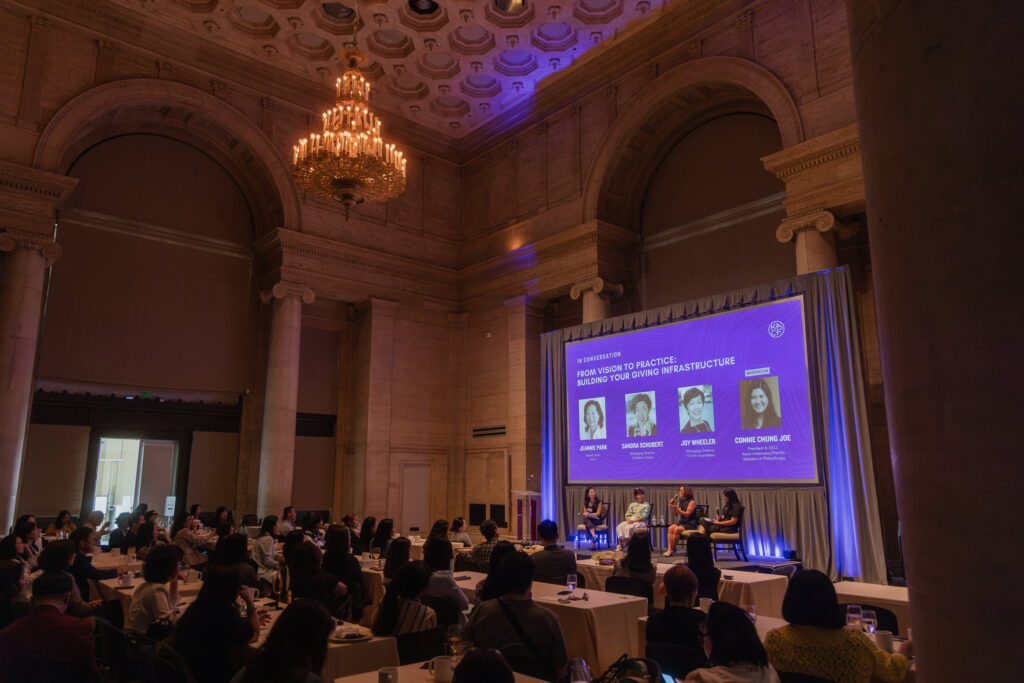
A panel on building a giving infrastructure, with Jeannie Park, Sandra Schubert, and Joy Wheeler, explored what it means to build a thoughtful and sustained approach to philanthropy, from choosing vehicles like donor advised funds and family foundations to navigating governance, family engagement, and decision making.
The conversation invited us to think more expansively about legacy. Rather than focusing only on what we build or leave behind for future generations, what can we make possible with our resources now?
Sandra Schubert (Managing Director, Goldman Sachs) described a broader generational shift she is seeing in among her clients families. Family foundations once often aspired to build enduring institutions that would grow across generations. Today, she sees more younger philanthropists, particularly women influenced by philanthropists like MacKenzie Scott and Melinda French Gates, prioritizing putting significant resources to work and seeing their impact within their lifetimes.
That sense of intentionality came through from different perspectives. “Whatever you do, you’ve got to get the money out,” Jeannie Park (Board Chair, KACF) said, reflecting on her own approach to giving. She spoke about being part of a community of people and causes she supports has shaped her philanthropy and why the structures we choose should reflect the values behind them.
Joy Wheeler (Managing Director, YS Kim Foundation) offered the perspective of someone leading a private family foundation. She shared how the YS Kim Foundation translates its philanthropic goals into practice by setting clear annual giving targets and challenging itself to significantly increase them each year.
For Korean American donors, this offers another way to think about what it means to leave a legacy: not only through what we pass down, but through what we choose to put into motion today.
Sandra noted that children do not necessarily share their parents’ philanthropic priorities. For families who want the organizations and causes they value to continue receiving support, planned giving and other intentional structures can ensure those commitments endure rather than assuming the next generation will carry them forward.
4. A culture of giving starts with showing up and carries across generations with intention
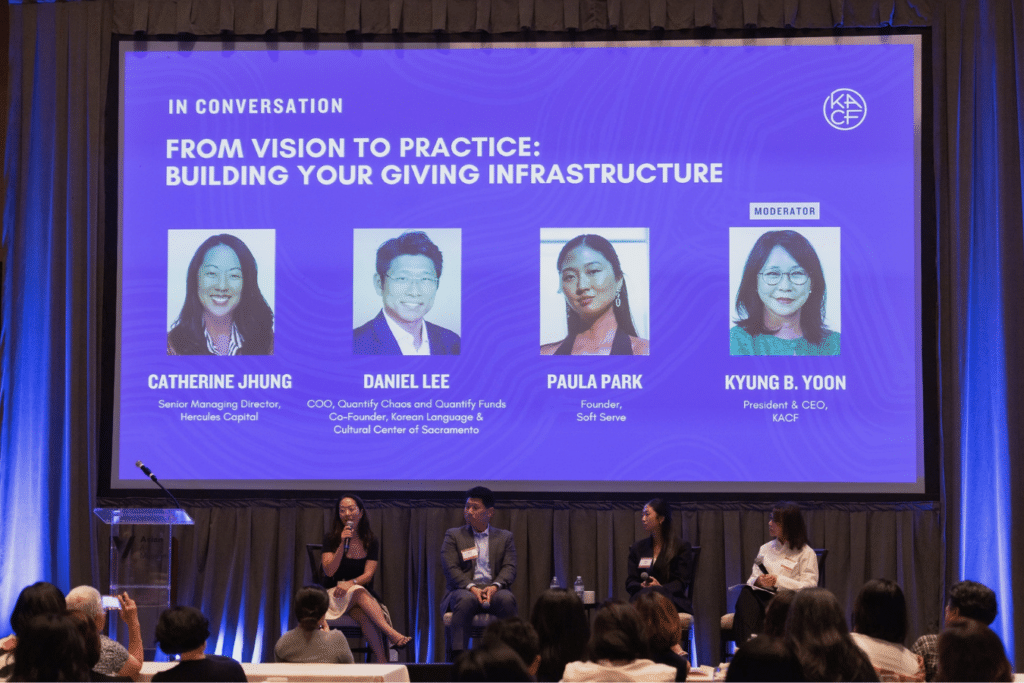
A panel on building a culture of giving in our lives, with Catherine Jhung, Daniel Lee, and Paula Park, made one thing clear: you don’t have to have it all figured out to begin.
Daniel Lee (COO, Quantify Funds and Quantify Chaos and Co-Founder, Korean Language and Cultural Center of Sacramento) described the start of what has become a 20-plus-year journey in philanthropy. “I didn’t know what I was getting myself into, but I knew I just needed to go,” he said. “I needed to help. I needed to be in the room.” Catherine Jhung (Senior Managing Director, Hercules Capital), reminded us that the barrier to starting is lower than many think. “You don’t need the capital to start your journey,” she said. “It’s about finding something you’re interested in with people you enjoy being with,” and incorporating philanthropy into your interests.
Paula Park (Founder, Soft Serve) encouraged us not to let perfection get in the way of action. “Done is better than perfect,” she said. “Being Korean sometimes paralyzes us with perfectionism, trying to achieve a perfect way, a perfect moment to understand how to do things. I really believe it’s better to stretch yourself and do that half-step instead of waiting to do that full step.” She also spoke about what makes giving last. Longevity, she said, comes from getting clear on “what you want your impact and legacy to be” and “understanding a long-term vision.”
Catherine and Daniel both spoke about wanting to create something lasting that their children can take part in and be proud of. That means creating opportunities for them to participate, understand the needs around them, meet people whose experiences differ from their own, and decide for themselves what they care about and how to contribute.
Rooted locally, connected nationally
As KACF and KACF San Francisco work toward merging into one unified organization, we have been thinking deeply about how to stay rooted in the communities we serve while creating more ways for people, ideas, resources, and relationships to connect across regions. The Giving Summit is one expression of what that can look like.
Thank you to everyone who spent the day with us in San Francisco, shared your experiences, asked questions, and brought your own perspective to the conversation.

JOIN OUR MAILING LIST